| FOM 5.2 |
Fleet Operations Manual FOM Use of Tugs and Support Boats |
Doc No.: FOM 5.2
Revision: 01 Date: 15 Oct 2024 Issued by: DPA Approved by: MD |
1. Use of Tugs, Mooring Boats and Support Craft
Master-Pilot Meeting
1) As soon as the Pilot or Mooring Master is on board, the Master must submit to him the Pilot Card prepared by the ship. Master must discuss the following:
- a) Number of tugs and other ancillary craft
- b) Rendezvous position and speed
- c)Designated strong points for making fast tugs
- d) Designated tug push points
- e) Bollard pull and any limitations
- f) Positioning of tugs Note: Tugs acting with a long lever from the ship’s pivot point are more effective
- g) Method of assisting:
- h) Lines to be used – ship’s or tug’s
- i) Means of communication
Note:
Master shall be the final judge for number of tugs requirement. He shall consider weather, berth restriction, manoeuvring characteristics, space availability and any other limitations.
caution:
Do not proceed at high speeds. This increases the possibility of capsizing or girting.
2)Ensure radar system of the tug is switched off
3)Ensure the following when operating with a tug or ancillary craft:
- Tug or ancillary craft is suitably fendered
- Propeller and thruster are clear of towing lines
- Towing line is in good condition
- Make fast sufficient mooring lines prior releasing the tugs
The Master must inform the officers in charge about the location and connection method for each tug.
- agree how they will communicate with the tug crew before starting any operation;
- use the hand signals in the ”Code of Safe Working Practice for Merchant Seamen” (COSWP) when working with tugs;
- monitor the tug’s manoeuvers and the connecting line strain. If the officer in charge suspects too much strain, he must make sure that ship staff are moved away from the tug line and that the Bridge is informed;
- not make fast or let a tug go until instructed to by the Bridge; and
- make sure that the vessel crew maintain control of the tug line messenger when releasing the tug, to prevent injury to the vessel or tug crew.
Note:
The officers in charge should make sure that when making a tug line fast, the eye is brought past the bitt, stoppered if necessary and the eye placed over a single post. The inboard post is preferred in order to gain full benefit from the bit’s design.
1.2 Mooring and Support Craft
The presence and usage of mooring boats / support crafts must also be clear and relevant information (how many, if they can carry wires ashore, how many ropes can be given to them at one time, rendezvous position of SPM hose boat etc.) to be discussed with Pilot.
1.3 Casting of Tugs
Don’t forget that the ship is considered “safe” only when she is “all fast”. It must be taken also in mind that almost everywhere the cost of Pilots and tugs is computed in matter of time, so that an unduly long mooring/unmooring operation becomes also an economical loss.
The cooperation of the Officer in charge in this respect is very important, he must report immediately when the tug boat or the mooring launch appears to intentionally delaying (rope into the water, laziness during operation, apparently intentional misunderstandings, etc.) again, this is not only a loss of time, but also a real threat of safety, Master must ensure that vessel has reached a stage where service of tug is no longer required before giving permission to release it.
Note:
When lines are under strain, the officer in charge of the mooring team shall ensure that everyone stands clear of all “snap-back” zones. Undue haste may jeopardize the operation or result in an unsafe act: ALWAYS SAFETY FIRST!!
1.4 Tug Handling During Deteriorating Weather Conditions
- Ship’s hull could be damaged by tugs trying to hold position
- Application of excessive power can result in over compression of fenders and damage to the shipside
- Operating limits of the tugs may be exceeded before mooring line loads or berth environmental limits are reached
- Ship movement due to tug intervention could exceed the operating limits of loading arms.
- You may have to disconnect arms / hoses prior using tugs
2 Number of Tugs to Be Used
- In consultation with Pilot, the Master should decide on the number of tugs to be employed for safe operation. Safety shall never be compromised for commercial reasons.
- Following factors shall be among those considered when deciding on the number of tugs to be used:
- Wind direction and wind force.
- Tide and swell, Set and drift of current.
- Draft and under keel clearance.
- Proximity to hazards and available manoeuvring room.
- Whether in loaded or ballast condition.
- Bollard pull and condition of the tugs.
- Whether vessel is equipped with own thrusters and its effectiveness.
- Reliability of own ship’s propulsion and power.
- On vessels fitted with bow thruster, additional tug should be used if Master deems it necessary due to light draft forward, strong winds / current or any other factors which may reduce the effectiveness of the bow thruster.
3 Making Fast / Letting Go the Tug
When making fast using tug’s line, it is the responsibility of the ship’s Officers to visually assess the condition of that line. If there is any reason to suspect its strength, the Officer must bring it to the attention of Master who will further take up the matter with the Pilot. All associated equipment such as heaving lines and Gant lines shall be kept standby, ready for immediate use. The condition of these lines shall be checked regularly to ensure that they do not part at critical moments while picking up the tug’s lines.
If using ship’s line to make fast a tug, only the best available lines shall be used. If necessary, the line shall be doubled up for safety or two lines shall be given. If more than one line is given, both ropes should be of equal size, of the same material, in similar condition and should be made fast such that both ropes share the load equally. For emergency, spare mooring lines shall always be available for immediate use and passing to the tug.
When letting go, the towline should be slacked back to the chock in a controlled manner using a messenger line, if necessary to avoid whiplash and injury to persons onboard/on the tug.
Follow below precautions while handling the tow line:
- Do not handle towlines with weight on them
- Do not let towline run uncontrolled
- When letting go the towline:
4 Use of High Powered Tugs
Care should be exercised when high horsepower tugs are engaged to keep the vessel alongside a jetty. Loading arms / hoses should be disconnected. The application of excessive power can result in over-compression of the fenders and damage to the ship’s side. To minimise the possibility of damage, tug push points should be clearly marked on the ship’s hull.
5 Use of Escort Tug
The escort tug should be tethered on the transom of the escorted vessel to be effective. A conventional tug is generally only acceptable if its bow fender is high enough to make up on the transom of the vessel and not slide off when working.
Escort Tug should only be made fast to the bitts and chocks which are designed to withstand the forces that can be exerted by large escort tugs.
Vessel transit speeds should be limited to that which the escort tug has proven it can save the vessel within the channel width available. Thus the transit speed must be balanced against the difficulties of conning the vessel at slow speeds in areas with strong currents. To do so may expose the vessel to a different and more immediate higher risk of grounding due to the current, rather than a possible mechanical failure.
The master, pilot and tug captain should be extremely alert and respond immediately to any casualty before the kinetic energy associated with the vessel’s swing is allowed to build. We recommend that the Master and Pilot specifically discuss the potential emergency maneuvers that may be required during the escort as part of the Master / Pilot information exchange.
An anchor stations should be manned during escort transits and ready to drop the anchor short if required to do so in an emergency.
6 Girting of Tug
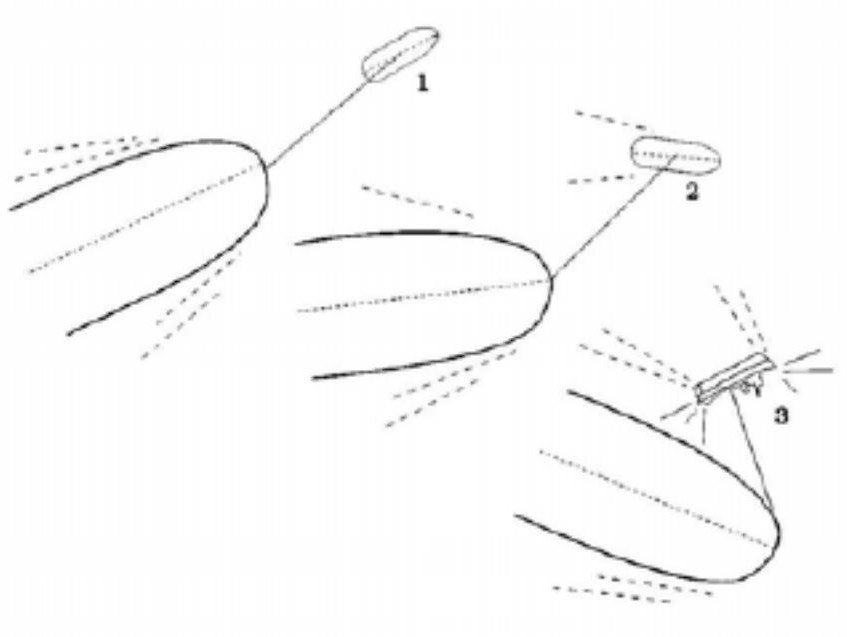
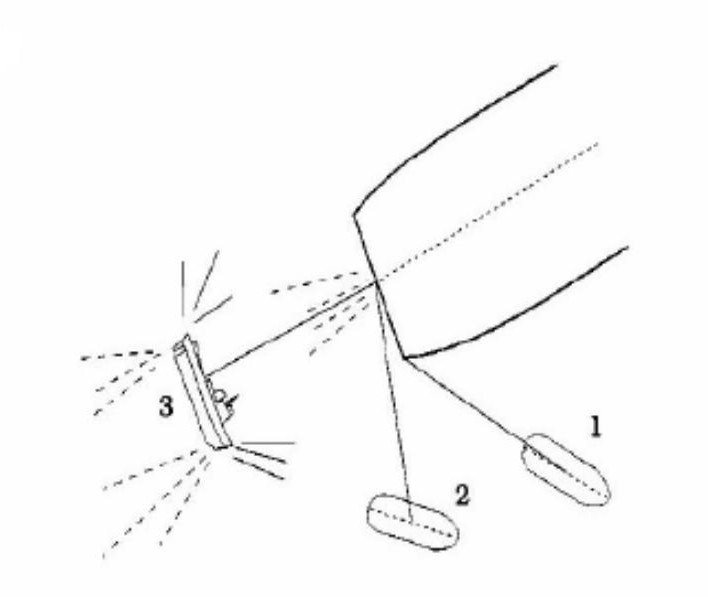
It is the capsizing moment of the tug due to the sudden movement of ships. The line is usually secured very near to the centre of flotation and for this reason the tug is liable to be girded. This phenomenon is known variously as girthing, girding or girting, in differing parts of the world.
It can be caused by one, or both of the following:
- The ship turning independently and too quickly away from the tug.
- Excessive straight-line speed with a tug made fast.
Girting: Forward
Girting: Aft
Use of Bridal/Gog Rope During Towing Operations
A suitable bridle or gog/gob rope or wire should be used in circumstances where the towline is likely to reach such an angle that a ‘girting’ situation may arise.
7 Do’s & Don’ts for Tug Operation
| Subject | To Do | To Avoid |
|---|---|---|
| Tug Boats |
|
|